
Chicken nutrition: protein and calories in each cut, and its benefits
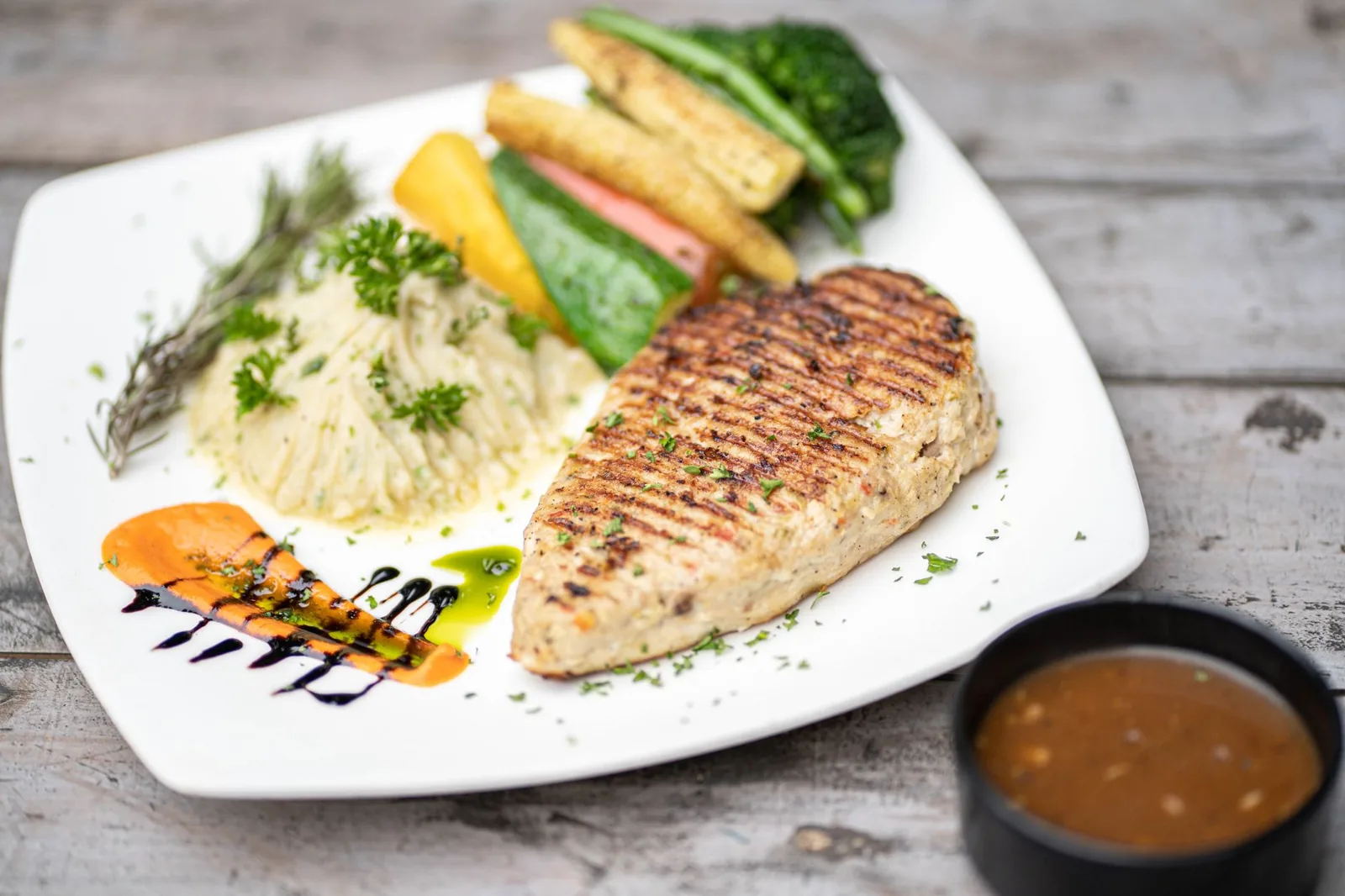
Chicken is one of the most common and affordable protein sources on the Saudi table, yet its nutritional value shifts noticeably depending on the cut you choose and how you cook it. Knowing how many calories and grams of protein are in each piece helps you build a balanced meal that serves your goal — whether that's losing weight, building muscle, or simply eating a balanced, healthy diet. This lesson gives you the real figures for each cut, then explains how to read and use them.
Chicken nutrition per 100 grams
The figures below are per 100 grams of cooked, skinless chicken, per the USDA FoodData Central database. Note they are for cooked meat, because cooking drives off water so protein becomes more concentrated for the same weight:
- Skinless breast: 165 cal, 31 g protein, 3.6 g fat — the highest in protein and lowest in fat.
- Skinless thigh: 179 cal, 24.8 g protein, 8.2 g fat — dark meat, richer in flavour.
- Skinless drumstick: 155 cal, 24.2 g protein, 5.7 g fat — the leanest of the dark-meat cuts.
- Skinless wing: 203 cal, 30.5 g protein, 8.1 g fat.
Why does cooked breast show 31 g of protein while raw is about 22–23 g? Because cooking removes water, so the piece shrinks and its protein concentrates. The nutrition of the same piece hasn't changed — only the reference weight has.
Why chicken is an excellent protein source
Chicken protein is a complete protein — it contains all the essential amino acids the body needs but can't make on its own. Its big advantage is delivering a lot of protein for few calories: cooked chicken breast provides about 31 g of protein in just 165 calories, meaning most of its calories come from protein rather than fat or carbohydrate (plain chicken with no additives is virtually carb-free). That is what makes it an ideal base for a filling meal without excess calories.
Breast or thigh? Choose the cut for your goal
There is no single "best" cut; the right one depends on your goal and taste. White meat (breast) is leaner and higher in protein per calorie, while dark meat (thigh and drumstick) is a little higher in fat, iron and zinc, more flavourful, and harder to dry out when cooking. We covered white vs dark meat in more depth in the chicken-cuts lesson of the restaurant guide. For a quick choice:
- Want the least fat and most protein per calorie (dieting or cutting): choose skinless breast.
- Want richer flavour, a more satisfying texture and forgiveness in cooking: choose thigh or drumstick.
- Counting calories precisely: skinless drumstick is among the lowest-calorie cuts with solid protein.
- In every case: removing the skin clearly lowers the fat and calories.
The key health benefits of chicken
- Building and maintaining muscle: a high-quality complete protein that supports tissue repair and muscle growth.
- Weight management: a high protein-to-calorie ratio increases fullness and helps control appetite.
- A heart-friendlier choice: skinless breast is low in saturated fat compared with many red meats.
- Supporting vitamins and minerals: chicken is a good source of B vitamins (such as niacin and B6), phosphorus and selenium, important for energy and immunity.
Keeping the nutrition when you cook
The values above are for skinless meat cooked in a healthy way. Leaving the skin on or deep-frying raises fat and calories sharply — the calorie count can roughly double from the oil and fried coating alone. To keep the lean profile: prefer grilling, baking or poaching, remove the skin before eating, and watch added oils and sauces, since they change the equation more than the cut itself. And remember that all chicken cuts must reach 74°C internally to be safe, per USDA/FSIS.
A practical rule: a lean cut can turn into a high-calorie meal because of how it's cooked, not because of the chicken itself. Choose the cut for your goal, then cook it in a way that preserves its value.