
Preventing cross-contamination with chicken: why not to wash raw chicken and how to separate it safely
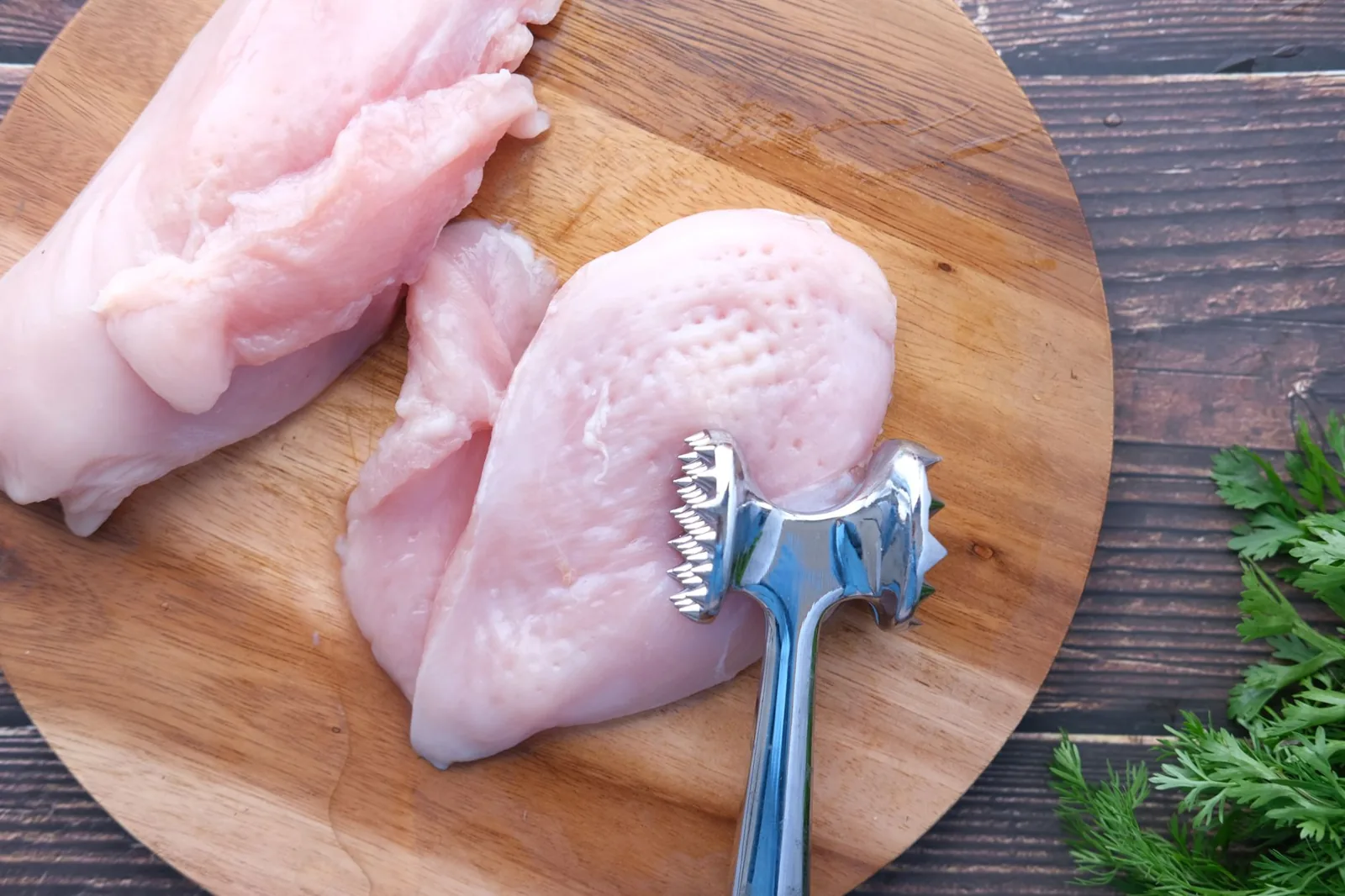
Cross-contamination is the transfer of bacteria from raw chicken to your hands, tools, surfaces or other ready-to-eat foods, and it's one of the most common causes of food poisoning at home. Raw chicken in particular often carries bacteria such as Salmonella and Campylobacter, and the U.S. Centers for Disease Control and Prevention (CDC) estimates that about a million people fall ill each year in the United States from eating contaminated poultry. The good news is that most of these illnesses are avoidable with simple habits during preparation. This lesson explains how cross-contamination happens and how to prevent it, step by step.
What cross-contamination is, and why chicken especially
The bacteria raw chicken carries can't be seen or smelled, so a product can look perfectly fine while carrying pathogens. The problem isn't cooking the chicken itself — enough heat kills these bacteria — but the raw juices touching a surface or a food that won't be cooked afterwards, such as vegetables, bread or salad. The bacteria then travel alive onto the customer's plate or the family table. That's why the risk is concentrated in the prep stage, between taking the chicken out of the cold chain and starting to cook it.
The most common mistake: don't wash raw chicken
Many people believe washing chicken before cooking makes it cleaner and safer — the truth is exactly the opposite. The U.S. Department of Agriculture and its Food Safety and Inspection Service (USDA/FSIS), along with the CDC, confirm that washing chicken does not remove bacteria; the only thing that kills them is cooking to a safe internal temperature. Worse, the rinse water sprays as a mist that carries bacteria onto the sink, the tap, the countertop and any nearby food. A study from Drexel University found this spray can reach nearly a metre (about three feet) from the washing spot, and a single droplet can carry vast, invisible numbers of bacteria.
Instead of washing: remove the chicken from its packaging carefully, and if you need a dry surface for seasoning, pat it with a paper towel that goes straight in the bin, then wash your hands, sink and surfaces well. Cooking alone — not water — is what makes chicken safe.
The golden rule: Clean, Separate, Cook, Chill
Food-safety authorities sum up contamination prevention in four simple steps: Clean, Separate, Cook, Chill. Applying them together blocks bacteria at every stage of preparing chicken. Here's how to put each step into practice.
Separate raw from ready-to-eat
- Dedicate a cutting board and knives to raw chicken alone, and don't use them for vegetables or ready-to-eat food (a colour-coding system makes separation easy).
- Always place raw chicken on the lowest shelf of the fridge, below ready-to-eat foods, so its juices can't drip onto them.
- Keep chicken apart from the rest of your shopping in the cart and bags, not touching vegetables or bread.
- Never return cooked food to the plate or surface that held raw chicken before it's cleaned.
- Cover raw chicken and store it in a sealed container that stops juices leaking.
Clean hands and surfaces
- Wash your hands with soap and water for at least 20 seconds before touching raw chicken and immediately after.
- Wash cutting boards, knives and surfaces with hot, soapy water after contact with chicken, then sanitise them.
- Don't wipe your hands on a cloth you'll reuse; replace towels and sponges regularly, as they spread bacteria.
- Wash vegetables and fruit away from the chicken-prep area, and never in the same water.
Cook and chill safely
Cooking and chilling are the last line of defence. Cook every part of the chicken until it reaches 74°C (165°F) at its thickest point, measured with a thermometer — this temperature kills Salmonella and Campylobacter, per USDA/FSIS (we cover the detail in the safe-temperatures lesson). After cooking, don't leave chicken — raw or cooked — out of refrigeration for more than two hours (only one hour if it's hot, above 32°C), and keep your fridge at 4°C or below.
A practical flow in your kitchen
- Plan the order of work so chicken is the last thing out of the fridge and the closest to cooking.
- Set up a board and knives dedicated to chicken, and move ready-to-eat foods away from the prep area.
- Right after cutting, wash and sanitise your hands, tools and surfaces before any other task.
- Cook the chicken to 74°C and confirm with a thermometer, not by colour.
- Chill leftovers within two hours in a covered container, placed on the lowest fridge shelf.
Discipline in separating and cleaning is the first line of defence against food poisoning; a single small slip here can cost your family's health at home — or your restaurant's whole reputation.