
Reading chicken labels and expiry dates: what Saudi rules require and what actually matters
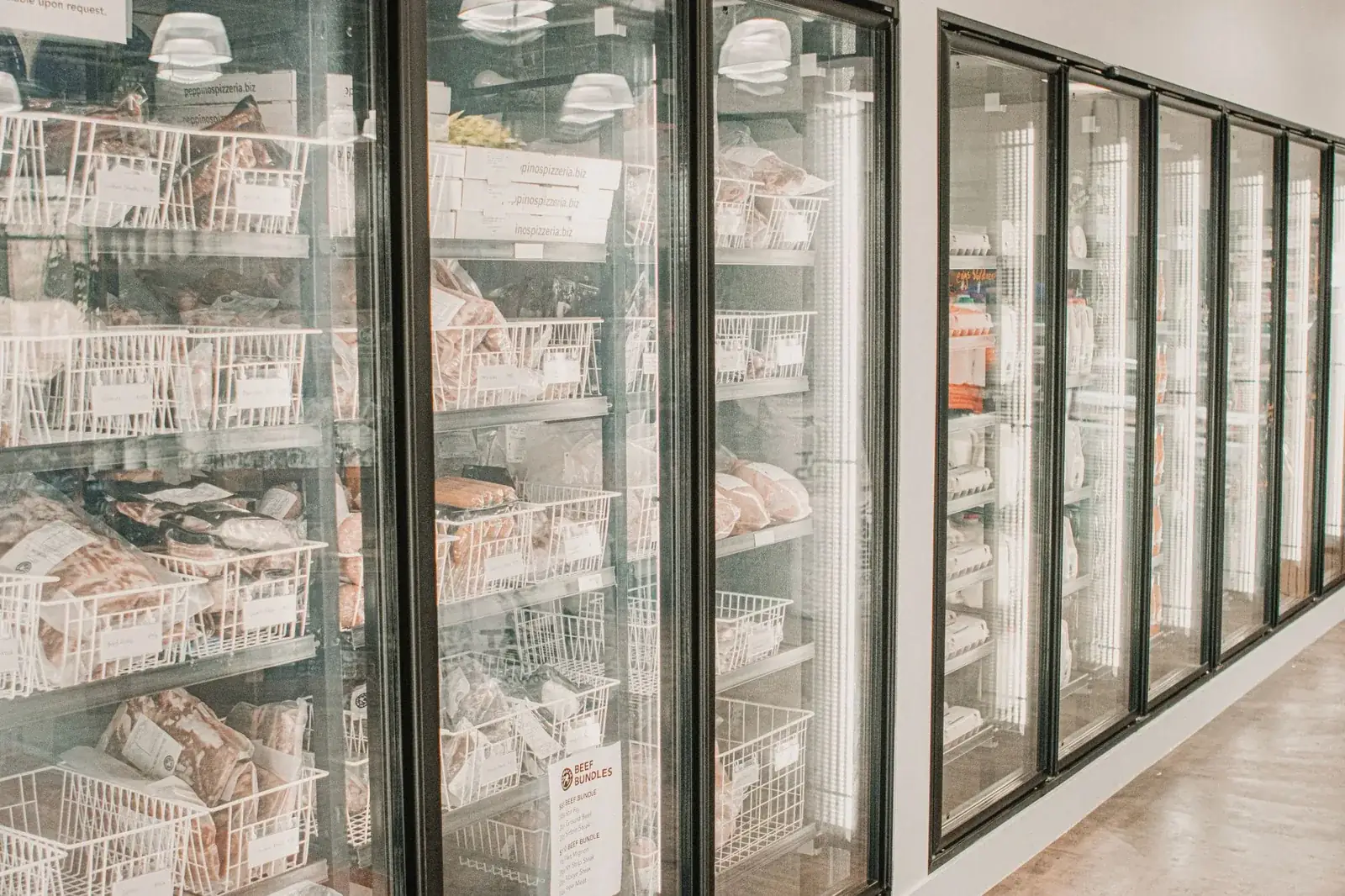
Standing in front of the chiller, the label is the only honest source of information you have. Colour, smell and packaging shape won't tell you the product's real age or the conditions it's supposed to be kept in — only the label does. The good news is that in Saudi Arabia this label isn't marketing decoration but a regulatory obligation: specific information must appear on it, dates must be printed in a specific way, and meat and poultry carry extra required details. This lesson teaches you to read a label in under half a minute, and what should make you reject a product on the spot.
What every prepackaged food label in Saudi Arabia must carry
Labels on prepackaged food products, whether imported or produced locally, fall under the Gulf standard GSO 9:2022 adopted by the Saudi Food & Drug Authority (SFDA). Among its key requirements is that the label must be in Arabic, or include an Arabic translation — a product must not reach the Saudi consumer carrying information they cannot read.
- A clear, non-misleading product name.
- The name of the packer or producer.
- Country of origin, marked in a way that cannot be removed.
- The ingredient list in descending order of proportion.
- Instructions for use where these are needed.
- The shelf life and its dates.
Extra details required for meat and poultry
Fresh meat and poultry carry broader obligations than other foods, because they are among the fastest-spoiling and most temperature-sensitive products there are. Alongside the production and expiry dates, the label must state the metric weight, the storage temperature required (or its range), and an attestation that the product meets halal slaughtering requirements. Imported meat and poultry shipments are additionally required to hold a halal certificate for each individual shipment.
The storage-temperature line is the detail shoppers ignore most, and it is in fact the condition the entire shelf life rests on. Always read it, then check that the cabinet you took the pack from actually matches it.
Production date and expiry date: both are mandatory
One important difference between the Saudi market and others is that stating the production date is mandatory here, not optional, alongside the expiry date. Both dates must be written uncoded — directly readable, not in factory codes the consumer can't decipher. The format follows the length of the shelf life: day-month-year for products whose shelf life does not exceed three months, and day-month-year or month-year for anything longer. Fresh chilled chicken has a short shelf life by nature, so always expect a full day, month and year.
More important than the format is who wrote the date and how: dates must be printed or stamped in permanent ink directly on the package or on its original label, and by the producer alone. Any date added afterwards on a sticker placed over another date, or scratched off and reprinted, is an outright violation — not a cosmetic detail.
Signs that should make you reject a product immediately: a date sticker placed over another one, a smudged or scraped-off date, or a date written by hand. You can report violations to the Saudi Food & Drug Authority's unified number 19999.
'Use by' and 'best before': not the same thing
The requirements permit more than one wording for expiry — such as "expiry date", "consume until", or "best before". Behind these wordings sits a global principle worth understanding: some dates speak about safety, and others about quality. In EU regulation, for example (Regulation EU 1169/2011), a clear distinction is drawn between a "use by" date, reserved for highly perishable products such as meat, poultry, fish and dairy, and a "best before" date, which is about quality rather than safety.
- Expiry date / use by — a safety date. The product is not to be consumed after it, even if it looks fine and smells normal. This is the date you should expect on fresh chilled chicken.
- Best before — a quality date. After it the product loses its best flavour or texture, and may still be fine if the packaging is intact and there are no signs of spoilage.
- Sell-by or display-until — a stock-rotation tool for the store, not an instruction aimed at you as a consumer.
Because systems differ between countries, it helps to know that the United States takes a very different approach: according to the Food Safety and Inspection Service (USDA/FSIS), federal rules do not require dates on foods at all, apart from infant formula — though a pack date is required on poultry products for traceability — and the agency recommends the phrase "Best if Used By" to signal quality. The practical rule, then: read the date in the context of the system of the country you bought in, and always treat the date on fresh chicken as a safety limit rather than a quality suggestion.
A date is a promise conditional on temperature
This is the single most important idea in the lesson: an expiry date is not an absolute guarantee but a promise conditional on the product staying at the stated storage temperature the entire time, from the plant to your fridge. Chilled chicken is meant to be kept at 4°C or below, and frozen chicken at −18°C or below. If that chain breaks — a pack left in a hot car for half an hour, a faulty display chiller, or a frozen product that thawed and was refrozen — the date has lost its meaning, however clearly it is printed on the pack. That is precisely why the rules require the storage temperature on the label: it is the condition the promise rests on.
- Ice blocks or heavy frost inside a frozen pack — among the clearest signs of thawing and refreezing.
- A frozen pack that is soft or bendable instead of completely solid.
- Frozen liquid pooled at the bottom of the pack, or pieces fused together into a single block.
- A pack that doesn't feel cold to the touch despite sitting in the display chiller.
- Tears or inflation in the wrapping, or liquid leaking outside the pack.
How to read a label in 30 seconds
- Look for the production and expiry dates together, and confirm both are printed on the pack rather than stuck onto it.
- Compare the expiry date with what you actually need — don't buy one day of margin for a cooking plan three days away.
- Read the storage temperature, and check that the display cabinet you took it from matches.
- Verify the halal slaughter statement and the country of origin.
- Check the metric weight so you can compare prices fairly between packs.
- Inspect the pack itself: tightly sealed, not torn or inflated, no pooled liquid or frost blocks.
- Make chicken the last thing into your cart, and move it into your fridge the moment you get home.
After purchase: the date isn't the whole story
Even a valid date doesn't override the limits of home storage. Raw chicken keeps in the fridge for just one to two days, and cooked chicken for three to four, per the SFDA and USDA, with the fridge at 4°C or below. The rule is that whichever comes first governs: the expiry date or the home-storage window. Freezing before the date effectively stops the clock — at −18°C chicken stays safe for long periods, with a quality window of around twelve months for whole birds and nine months for parts. We covered these periods in detail in the lesson on storing chicken correctly at home.
The moment a pack is opened a new, shorter clock starts and the printed date no longer applies as it stands; treat opened raw chicken by the one-to-two-day fridge rule. And never refreeze chicken that thawed outside the fridge.
Common label-reading mistakes
- Reading only the expiry date and ignoring the production date, when comparing the two is what reveals the product's real age.
- Assuming "best before" means the product is safe indefinitely.
- Ignoring the storage-temperature line, which is the basis of the entire shelf life.
- Relying on look and smell instead of the date — bacteria can't be seen or smelled, as we explained in the cross-contamination lesson.
- Taking the first pack at the front without checking the dates on the packs behind it.
- Accepting a pack carrying a date sticker placed over another date.
A label isn't a regulatory formality that concerns companies alone — it's a tool in your hands for holding both the product and the store to account. Thirty seconds of careful reading before you buy saves you from asking "is this still good?" three days later.