
Halal chicken: what it actually means and how to be sure
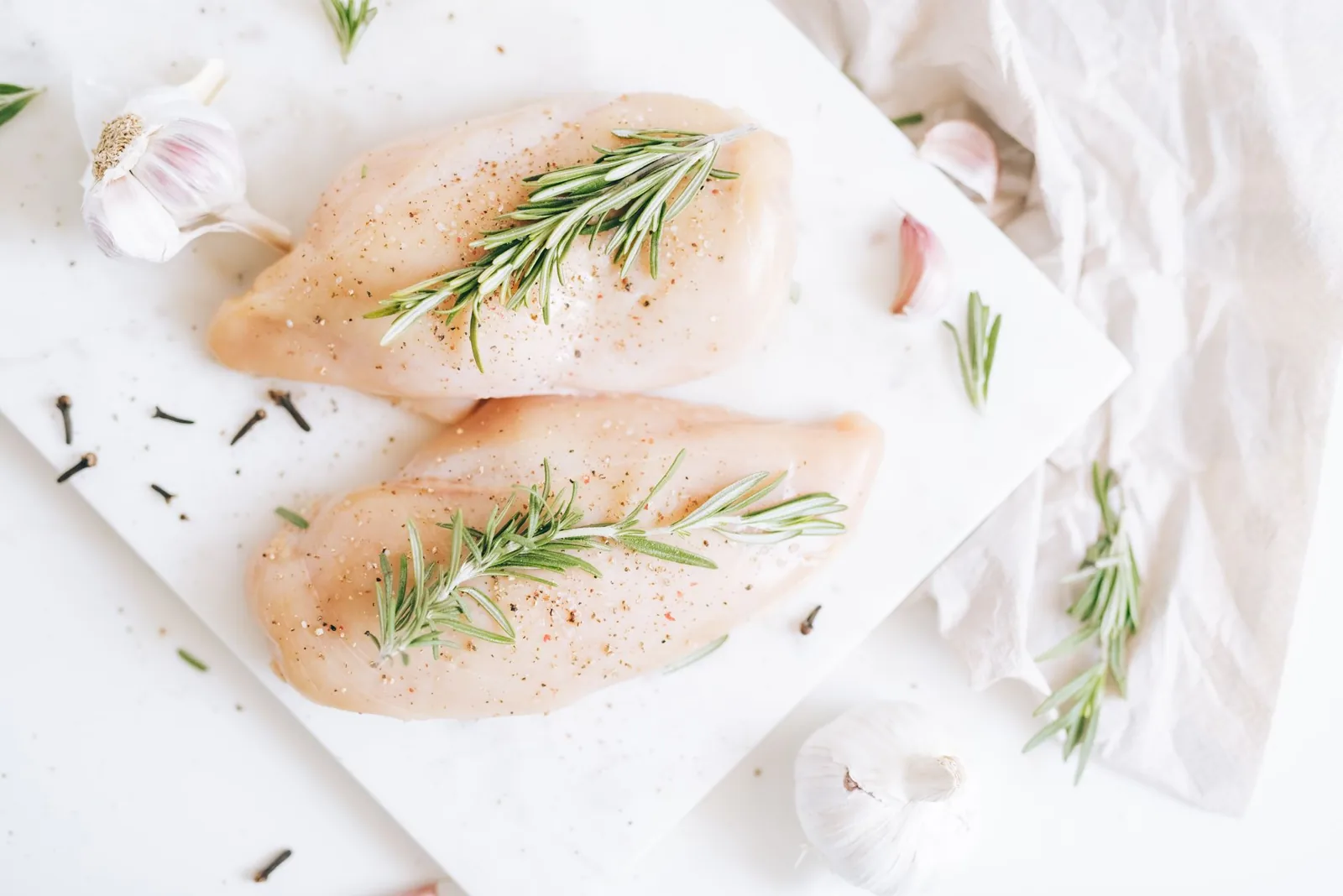
In the Saudi market most of us assume the chicken on display is halal by default, so we neither ask nor check. That assumption is usually right — but it remains an assumption. Halal is not a quality granted to a product automatically because it was sold in a Muslim country; it is the outcome of a chain of religious conditions and documented procedures, every link of which can be audited and evidenced. Understanding that chain helps you twice: it makes you a shopper who knows what to look for on the pack, and it lets you tell the difference between a product backed by a recognised certification body and one that simply prints the word "halal" with nothing behind it. This lesson walks the whole chain: from the jurisprudential condition, to the Gulf standard, to what you actually do in front of the chiller.
What makes chicken halal?
Chicken is a permissible bird to begin with, so the species raises no question; the ruling attaches to how its life is ended. A bird that dies by strangulation, by shock, from disease, or from any cause other than valid Islamic slaughter is considered carrion and is not lawful to eat, however clean or outwardly sound it may be. This is why the difference between two chickens identical in appearance, weight and quality can come down to a single minute of their lives: how each one was slaughtered.
The conditions of valid Islamic slaughter, on which the works of jurisprudence and modern halal standards agree, can be summarised as follows:
- The bird must be alive at the moment of slaughter — not dead, nor effectively so.
- The slaughterer must be of sound mind and discernment; the norm is that he be Muslim, and the majority of jurists have held the slaughter of the People of the Book to be lawful.
- The tasmiyah at the moment of slaughter — pronouncing the name of God.
- The instrument must be sharp and cutting, such as steel; slaughter with a tooth or a nail is not valid.
- Severing the airway and the food passage at the front of the neck, together with the vessels as detailed below.
- Letting the blood flow out and drain fully before any further processing.
What exactly is severed
The four parts in question at the neck are: the trachea (the airway), the oesophagus (the food and drink passage), and the two jugular vessels running along either side of the neck. Jurists differed over the minimum that suffices: the Shafi'i and Hanbali schools required severing the trachea and oesophagus; the Hanafi school added one of the two jugulars; and the Maliki school required the trachea and both jugulars. The complete form, whose sufficiency no one disputes, is severing all four — and this is what contemporary halal standards adopt, because it produces the fastest and most complete bleed-out, combining agreement across all the schools with the best practical outcome for the product.
Complete bleed-out is not only a religious condition; it has a tangible effect on the product. Blood left in the tissue accelerates bacterial activity, shortens shelf life, and affects the meat's colour and flavour. A carcass that meets the religious conditions is usually the technically better one too.
From jurisprudential condition to auditable standard
The religious condition alone is not enough to run a plant slaughtering thousands of birds a day; it has to be translated into written procedures and records a third party can audit. That is what the Gulf standards adopted in Saudi Arabia do: GSO 993 addresses the requirements for slaughtering animals and birds according to Islamic law, while GSO 2055-1 sets out the general requirements for halal food across the entire chain, not at the point of slaughter alone.
That last point is the one most people miss: the scope of GSO 2055-1 covers preparation, packaging, labelling, receipt, transport, distribution, storage, display, handling and food services. Which means a bird slaughtered perfectly correctly can still lose its halal status afterwards if it comes into contact with a non-halal product on the line, in chilling or in transit, or if non-compliant ingredients or treatments are added to it. Halal is therefore a description of the whole chain, not a certificate awarded to a single moment and then forgotten.
What makes the Saudi market distinct
Saudi requirements are among the strictest in the world — a practical difference worth knowing if you are comparing a local product with an imported one. According to halal certification guidance aimed at exporters to the Kingdom, mechanical machine slaughter is not recognised for the Saudi market and hand slaughter is required; stunning before slaughter is not accepted; and the tasmiyah must be pronounced over each individual bird rather than once collectively or via a recording. These are stricter than many certification programmes in other markets, which permit reversible stunning or mechanical poultry slaughter under defined controls — which is why a certificate issued for another market may not suffice for entry into Saudi Arabia without further audit.
On the import side, the Saudi Food & Drug Authority requires consignments of meat, poultry and their products entering the Kingdom to be accompanied by a halal slaughter certificate, issued exclusively by a halal certification body recognised by the Authority's Saudi Halal Center — with legal action taken against violators. The Authority distinguishes between the halal certificate granted to a facility, valid for three years, and the consignment certificate issued for each individual shipment.
How you verify before buying
Practical verification takes no more than half a minute. These are the steps in order:
- Look for the halal-slaughter statement on the label itself; it is one of the details Saudi labelling requirements make mandatory for fresh meat and poultry, not an optional marketing addition.
- Look at the certifying body's mark, not the word "halal" alone. The bare word, with no issuing body's logo and no certificate reference, carries no real verification value.
- Check the certifying body's name against the list of bodies recognised by the Saudi Halal Center, published on the Center's website.
- Check the country of origin and the name of the producer or packer — both mandatory on the label — which let the product be traced to a specific facility.
- Tie all of that to the state of the product itself: an intact, un-restickered date, sealed packaging, and a display chiller running at the temperature printed on the label.
The list of recognised halal certification bodies is published on the Saudi Halal Center's website at halal.sfda.gov.sa, and any suspicion or violation can be reported through the Saudi Food & Drug Authority's unified number 19999.
Halal and food safety: two different guarantees
One of the most common confusions is treating a halal certificate as a food-safety certificate. It is not. A halal certificate tells you the product met the religious requirements along its chain; it tells you nothing about the temperature it was held at on the way to you, how close it is to its expiry date, or how hygienically you handle it in your kitchen after buying. A perfectly halal chicken can become a food-safety hazard if its cold chain breaks or it sits two hours out of the fridge. The two guarantees are independent and you need both — see the lessons on reading labels and expiry dates and on storing chicken correctly at home for the other half of the picture.
The short rule: halal tells you how this chicken got into the pack; food safety tells you whether it stayed that way until it reached your hand. Ask about both, every time.