Freezing eggs: what freezes, what does not, and how
The same situations happen in every kitchen: a carton nearing its date that you will not finish, a recipe that called for whites only and left you with yolks you do not know what to do with, or an offer that made you buy more than you use in a fortnight. Throwing them out is not the only option; eggs are among the best things you can freeze, and they keep for a long time when frozen properly. But freezing has one strict rule and a handful of details that decide the difference between eggs that come back to the kitchen intact and eggs that come out of the freezer as a lump no recipe can use. This lesson covers what freezes and what does not, and how to freeze it step by step.
The first rule: never freeze an egg in its shell#
The U.S. Department of Agriculture advises never freezing eggs in the shell. The reason is simple physics: liquid expands as it freezes, and the rigid shell gives that expansion no room, so the shell cracks or bursts. Worse, the crack opens a route for bacteria into the contents while the egg sits in the freezer or during thawing, so any egg that froze in its shell and cracked is discarded, not risked. The practical rule, then: crack the eggs out of their shells before freezing, always, with no exception.
If you forgot an egg in the freezer still in its shell and later find it apparently intact, do not gamble. An egg frozen in the shell either cracked, in which case it is discarded, or stayed whole but usually changes texture once thawed. The safe habit is to freeze eggs cracked into a container, every time.
Whole eggs: beat the yolk and white together first#
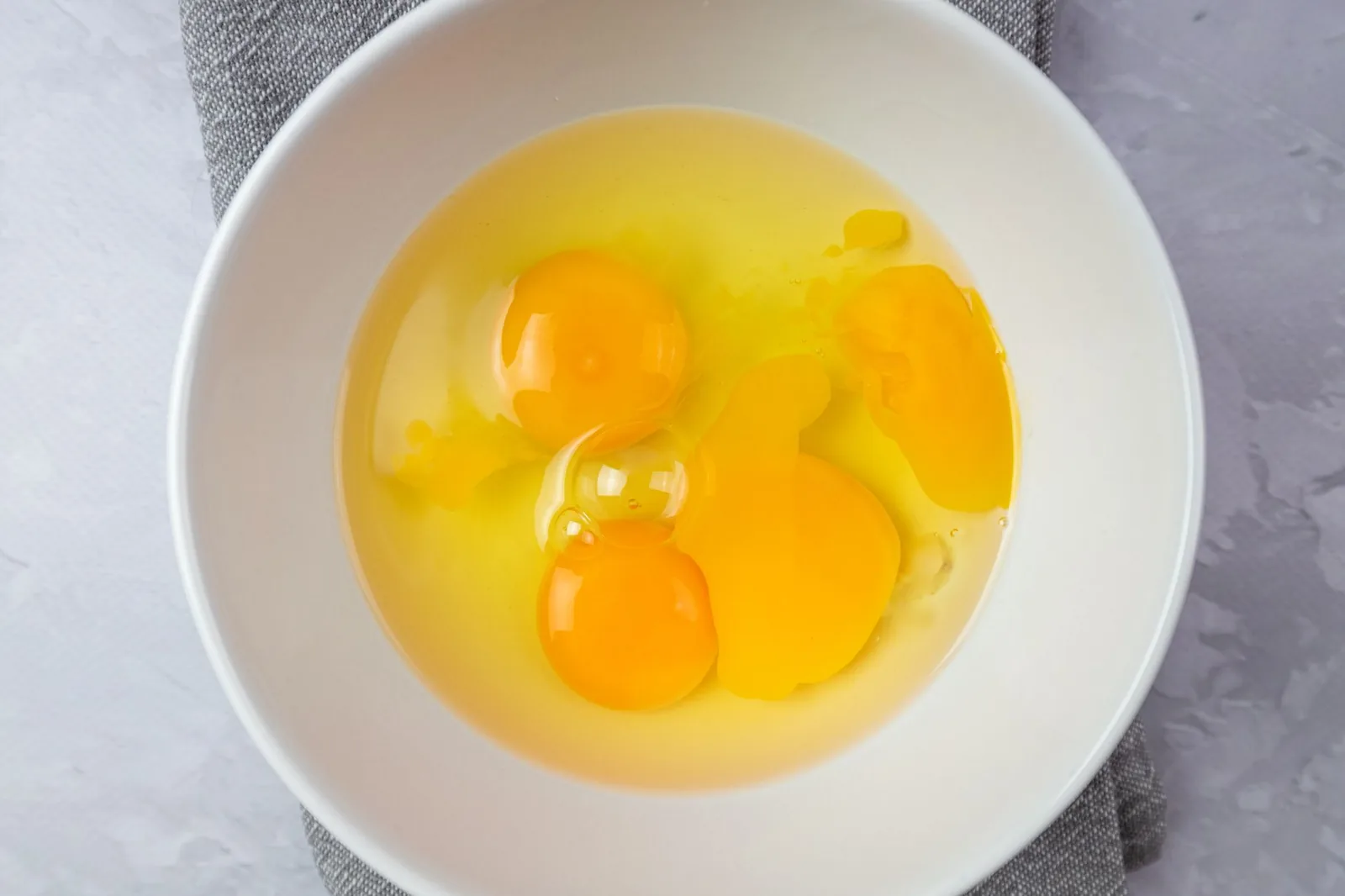
If you want to freeze whole eggs, crack them into a bowl and beat the yolk and white together lightly until just blended, then freeze the mixture. This step is not cosmetic: egg yolk has a property called gelation on freezing — it thickens into a sticky, gel-like consistency when frozen on its own, which makes it hard to use later. Beating the yolk into the white spreads that effect out and keeps a usable texture. Do not whisk hard, so you do not beat in a lot of air; just until the colour is even.
Yolks on their own: they need salt or sugar#
If you are left with yolks alone and want to freeze them, simply putting them in the freezer as they are will not do, because they will gel and turn rubbery. The fix recommended by the National Center for Home Food Preservation at the University of Georgia is to beat in a little salt or sugar before freezing to stop the gelling, and you choose between them by how you plan to use the yolks later:
- For savoury dishes such as omelettes, quiche and sauces: beat in one-eighth teaspoon of salt per quarter-cup of yolks (about four yolks).
- For desserts and baking: beat in one and a half teaspoons of sugar or corn syrup per quarter-cup of yolks.
- Without the salt or sugar, frozen yolks set into a gel that is hard to blend into any recipe — so this addition is not a refinement but a condition for success.
- Write on the container whether you added salt or sugar; salted yolks in a cake, or sweetened yolks in a sauce, are both mistakes that are hard to undo.
Whites on their own: the easiest to freeze#
The white is the simplest part of an egg to freeze, and it needs no additive at all. The best method is to pour each white into one cup of an ice-cube tray, so a single white freezes in each cup, and once solid transfer them to a sealed freezer bag. That way you can later take out exactly the number you need without thawing the whole batch. Frozen whites whip up and rise well after thawing, which makes them suitable for meringue and for baked goods that rely on beaten whites.
The practical method, step by step#
- Crack the eggs into a clean bowl and check each egg on its own before adding it to the rest, so one bad egg cannot spoil the batch.
- Prepare the mixture by type: whole eggs beaten, or yolks with salt or sugar, or whites with nothing added.
- Pour into an ice-cube tray at one egg, yolk or white per cup, which gives you small portions that are easy to count.
- Freeze the tray until the portions are solid, then pop them out into a sealed freezer bag or container, pressing out as much air as you can.
- Label the bag with the date, the number of eggs, yolks or whites, and whether the yolks are salted or sweetened.
Keep the conversions handy: one beaten whole egg is about three tablespoons, one white about two tablespoons, and one yolk about one tablespoon. With these you can measure what you thawed and know how many eggs it stands in for in a recipe.
How long it keeps and how to thaw it#
Eggs frozen out of the shell keep safely for a long time; the USDA recommends using them within a year for best quality. Freezing halts bacterial growth but does not kill bacteria, so this window is about quality, not safety alone. Thaw frozen eggs overnight in the refrigerator, or hold the sealed container under cold running water until it softens, and do not thaw them at room temperature, which leaves the surface in the danger-zone range for too long. Use thawed eggs promptly and in dishes that will be cooked through, and do not refreeze them once thawed.
What does not freeze well#
Not everything egg-related survives freezing. Hard-boiled eggs in particular do not freeze well: the cooked white turns tough, rubbery and watery once thawed, and is unpleasant to eat, so there is no point freezing whole boiled eggs. Cooked yolks, on the other hand, can be frozen on their own to grate over dishes or into salads later. Egg-based dishes can also change on freezing and thawing — some custards and sauces may separate — so test a small amount first before freezing a whole egg-based recipe.
Freezing in the Saudi kitchen: a weapon against waste and heat#
In a hot climate an egg loses quality faster, and a carton of thirty can outrun your ability to use it. This is where freezing becomes a practical tool against waste: instead of watching a carton edge toward its date, freeze what you will not use while it is still fresh, not on its last day. Freeze eggs at their best, because freezing preserves the state they went in at — it does not improve it. That way you can buy the tempting offer without worry, and turn the leftover whites and yolks from every recipe into a ready store rather than sending them to the bin.
The takeaway is that eggs freeze easily and come back to the kitchen usable for a full year, provided they leave the shell first: whole eggs beaten, yolks with a pinch of salt or sugar, or whites on their own with nothing added, kept in small portions labelled with their date, thawed in the fridge and used in a cooked dish. With those few steps a carton nearing its date and the leftovers of a recipe become a store rather than waste.
Frequently asked questions
Why can't I just freeze an egg in its shell?
Because liquid expands as it freezes and the rigid shell gives it no room, so the shell cracks or bursts, and the crack opens a route for bacteria into the contents. The USDA advises never freezing eggs in the shell; crack them out into a container first, and any egg that froze in its shell and cracked is discarded.
Why do yolks need salt or sugar before freezing?
Because yolks gel on freezing — they thicken into a sticky, gel-like consistency that is hard to blend into recipes. The National Center for Home Food Preservation recommends beating in an eighth of a teaspoon of salt per quarter-cup of yolks for savoury use, or one and a half teaspoons of sugar per the same amount for sweet use, to prevent that gelling. Whites on their own need no additive.
How long do frozen eggs stay good?
The USDA recommends using eggs frozen out of the shell within a year for best quality. Freezing halts bacterial growth but does not kill bacteria, so the window is mainly about quality. Thaw them overnight in the fridge, use them promptly in a dish cooked all the way through, and do not refreeze them after thawing.
Can I freeze hard-boiled eggs?
Whole hard-boiled eggs do not freeze well; the cooked white turns tough, rubbery and watery once thawed. Cooked yolks, however, can be frozen on their own to grate over dishes or into salads later. If you want to keep cooked eggs for a few days, the fridge is better than the freezer.
Related articles

Storing eggs at home: the right temperature, the real shelf life, and the common mistakes
10 min read
Storing chicken correctly at home: how long it keeps and how to keep it safe
7 min read