White striping and woody breast in chicken: what causes them, and are they safe
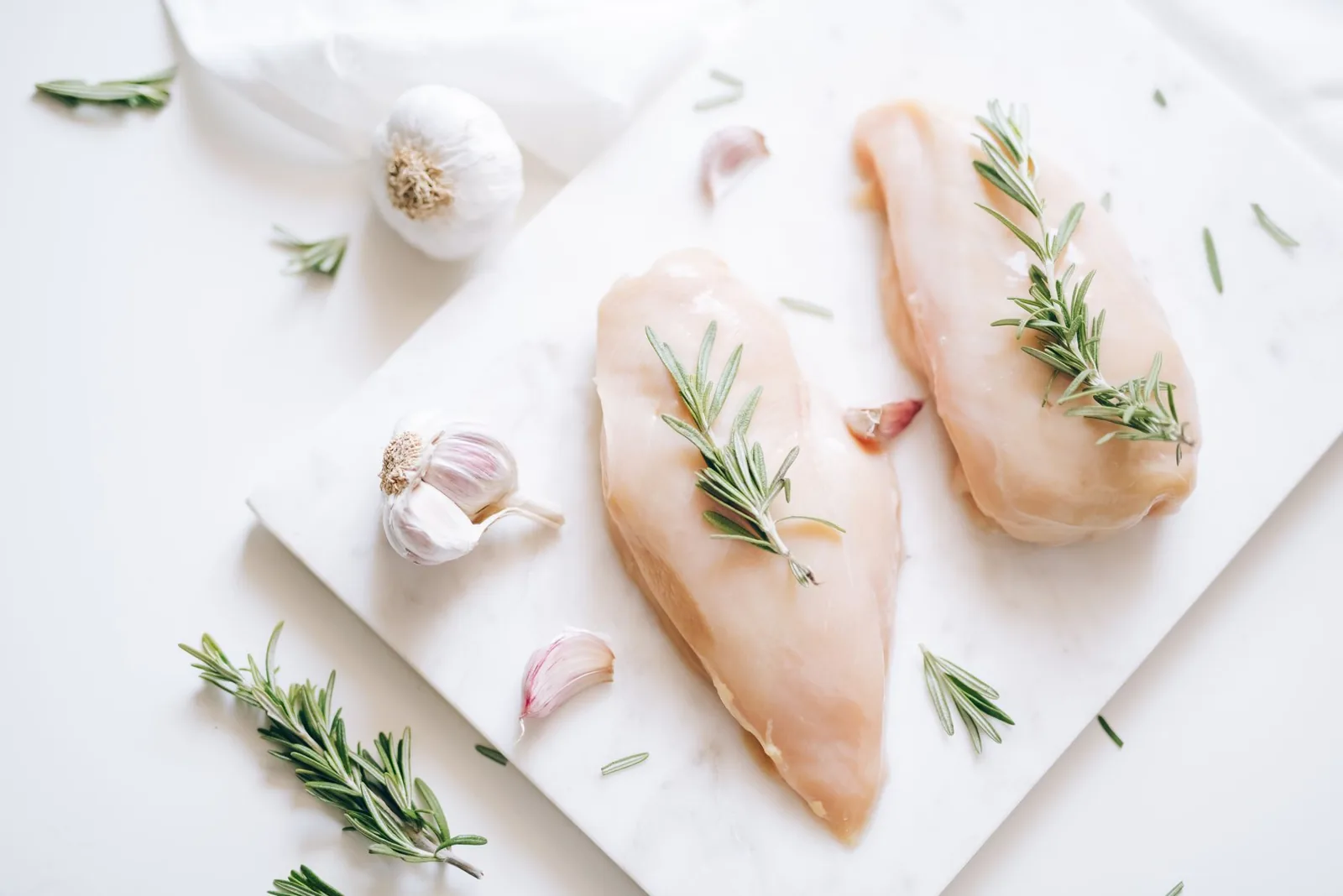
You open a pack of chicken breasts and find white lines running across the surface, parallel to the grain of the meat — or you press a breast and its thick end feels hard, almost rubbery. Either way the same question follows: is this chicken all right? And are these the marks of hormones, as the videos going around claim? This lesson explains what these conditions actually are, what research has measured about them, and what that means for anyone who buys and cooks chicken.
Three conditions, three names#
Researchers group these under the name breast muscle myopathies, and they affect the large pectoral muscle of fast-growing meat chickens. Three are best known, and they often turn up together in the same fillet:
- White striping: white lines running parallel to the muscle fibres, largely fat and connective tissue that have taken the place of muscle. It ranges from faint, barely visible lines to thick, severe ones.
- Woody breast: a hardening of the muscle that your finger finds before your eye does; the breast is often pale and sometimes bulges at its upper end. The condition was first described in the scientific literature in 2014, in a University of Helsinki study published in Veterinary Pathology.
- Spaghetti meat: the muscle fibres come apart until they separate like strands, and the fillet feels soft and falls apart when you pick it up.
Are they safe to eat?#
The answer the sources agree on is that these are quality defects, not safety defects. The US National Chicken Council states that there are no food safety or health concerns for consumers because of this muscle condition, and research to date has not recorded harm to people from eating an affected breast. The fault lies in the structure of the muscle itself, not in a germ or a foreign substance, so it does not change how you cook safely: a striped breast is cooked to 74 °C at its centre like any other.
What matters is not to confuse white stripes with signs of spoilage. The stripes are fixed in the meat and are there on the day you buy it; they come with no sliminess, no sour smell and no shift in colour towards grey or green. If you see those signs, the issue is spoilage rather than a muscle condition, and the lesson on spoilage signs is the one that applies.
Not hormones: where they actually come from#
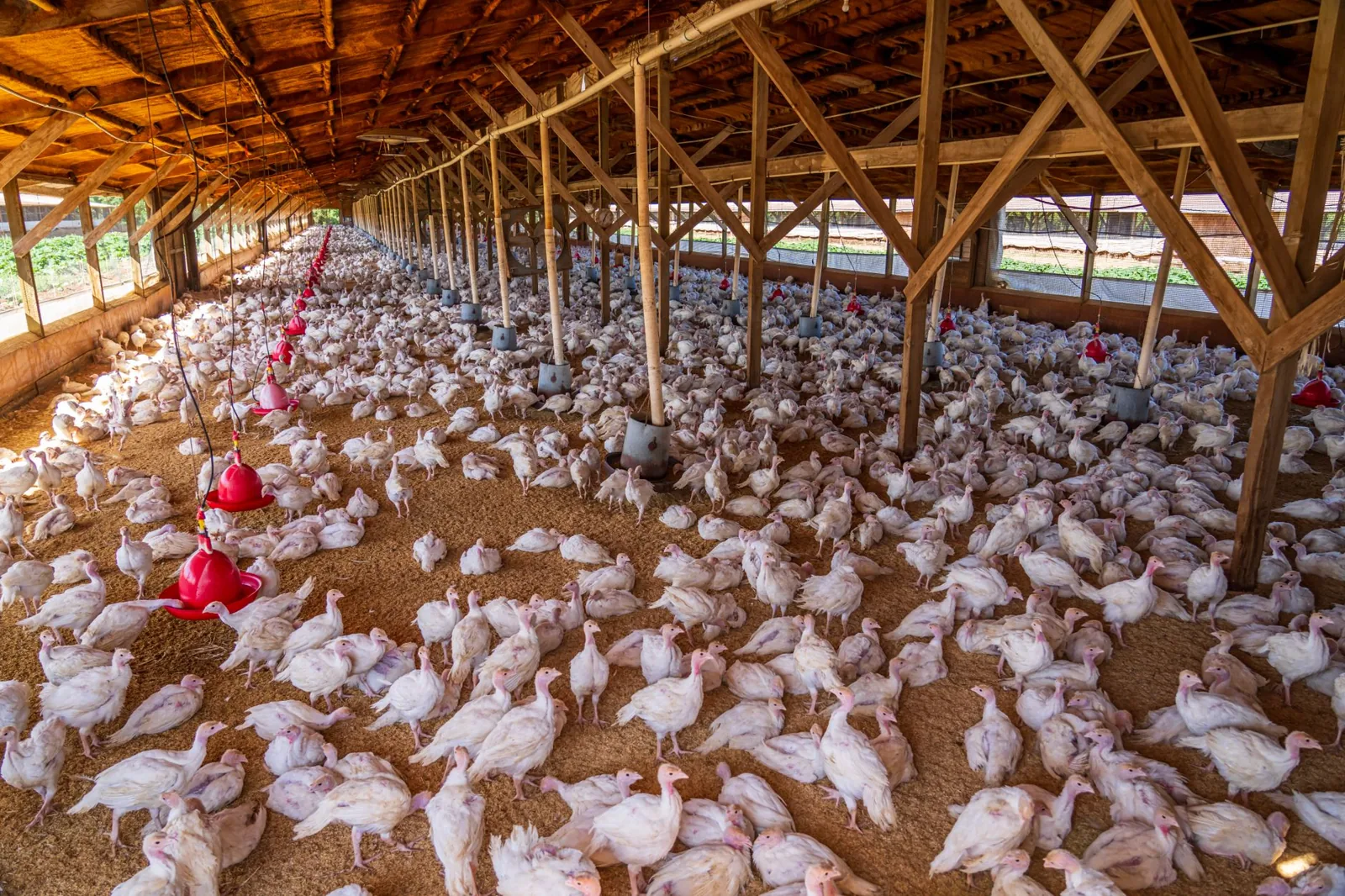
Many Arabic articles blame white stripes on hormones, and the research does not support that: growth hormones are not used in producing meat chickens in the first place, as the hormones lesson in this course explains. The explanation researchers agree on is growth rate and breast size. A 2019 scientific review in Comprehensive Reviews in Food Science and Food Safety links these conditions to a breast muscle that grows faster than its blood supply can keep up with, so parts of it get too little oxygen, fibres are damaged, and fat and connective tissue take their place.
Field studies bear the link out. In an Italian study published in Poultry Science in 2013, which examined 28,000 fillets from 56 flocks, moderate and severe white striping was clearly more common in high-breast-yield strains than in standard ones. In a Canadian study published in PLOS ONE in 2022, the odds of woody breast rose with the birds' live weight, and the odds of spaghetti meat rose with weight and with higher environmental temperature during the grow-out period. That last point deserves attention in a climate like the Kingdom's — with the caveat that we found no published study measuring how common these conditions are in Saudi chicken specifically.
How common are they? Figures from two studies#
- The Italian study (2013, 28,000 fillets): visible white striping affected 12% of breasts — 8.9% moderate and 3.1% severe.
- The Canadian study (2022, 9,250 fillets from 37 flocks in Ontario): mild or moderate white striping appeared in 96% of fillets, spaghetti meat in 36.3%, and severe woody breast in 11.8%.
- In the same Canadian study, 85.1% of fillets carried more than one condition at once.
The gap between 12% and 96% is not a contradiction: the Canadian study counted the faint, barely visible grade, while the Italian one counted only the moderate and severe grades. In other words, faint lines are present in most modern chicken breasts; what varies from batch to batch is how severe they are.
What changes on the plate: fat, protein and eating quality#
A line going around online says a striped breast contains 224% more fat. It comes from a real University of Bologna study published in the Italian Journal of Animal Science in 2014, but it is usually read out of context. Fat in a normal breast was 0.78% of its weight, 1.46% in a moderate one and 2.53% in a severe one. The relative increase is genuinely large, but in absolute terms it is under two extra grams per 100 g, so a striped breast is still one of the leanest meats you can buy. In the same study protein fell from 22.9% to 20.9%, with collagen up and moisture down.
The effect a cook actually feels is in water and marinade. In the Italian study a normal breast absorbed 12.67% of its weight in marinade, a moderate one 10.97% and a severe one only 7.92%; cooking loss rose and tenderness fell as striping got worse. Woody breast is even more noticeable in the mouth: a rubbery, chewy texture that longer cooking does not fix.
Shoppers notice too. In a University of Arkansas study published in Poultry Science in 2012, photographs of fillets were shown to 75 consumers: a normal breast scored 6.9 on the liking scale against 4.5 for a severely striped one, and more than half said they would not buy a moderately or severely striped breast because it looked fatty. So if you sell or serve breast as a whole, visible piece, appearance alone is reason enough to sort your batches.
How to handle them at home#
- Check at the counter: look at the breast surface through the pack and press gently on its thick end; a normal breast is springy and returns to shape, a woody one is firm and does not give.
- Do not confuse white stripes with the white tendon in the small tenderloin attached to the breast; the tendon is a single cord in a separate piece, whereas stripes are many lines on the surface of the breast itself.
- For a striped or woody breast, choose methods that suit it: slice it thinly across the grain, cook it slowly in moist heat, or mince and finely dice it for kofta, fillings and home-made shawarma.
- Do not count on marinating to fix the texture; a severe breast takes up less marinade, as we saw, so extend the soaking time a little rather than adding more salt.
- Cook it to 74 °C at the centre like any chicken, and no further in the hope that long cooking will soften it; overcooking only makes it drier.
What it means for restaurants and bulk buyers#
In modern processing plants, woody and severely striped breasts are usually sorted by touch on the line, downgraded and sent to further-processed products such as minced and formed items, and the industry is testing electrical-impedance and imaging devices to sort them automatically. In a restaurant the effect is directly financial: a breast that takes up less marinade and loses more weight in cooking gives you less yield from the same kilo, and an inconsistent texture from plate to plate.
- Add a breast check to your receiving standard: sample every delivery by sight and touch, and record the share of severely striped and woody fillets.
- Agree a breast-weight range with your supplier in writing to suit your dishes; heavier breasts are more prone to these conditions, according to the studies.
- Allocate batches: sound breasts for dishes where the fillet is served whole and grilled, affected ones for mince and finely cut uses.
- Track yield after marinating and cooking every week; a sudden drop with one supplier is a signal worth raising with them.
The whole lesson in one sentence: white striping and woody breast are a muscle-quality defect caused by fast growth and heavy breasts, not hormones and not spoilage; they are safe when properly cooked, but they change fat, texture and yield enough that it is worth sorting them and choosing the right dish for them.
Frequently asked questions
Are white stripes on chicken breast a sign of hormones?
No. Research links them to the fast growth of meat chickens and the size of the breast muscle, which grows faster than its blood supply can deliver oxygen, so fibres are damaged and replaced with fat and connective tissue. Growth hormones are not used in producing meat chickens at all.
Can you eat woody or striped chicken breast?
Yes. These are quality defects, not safety defects, and research has not recorded harm to people from eating them. Cook it to 74 °C at the centre like any chicken, and choose thin slicing, mincing or moist cooking for it, since its texture is tougher.
Is it true that a striped breast has 224% more fat?
The relative figure is correct but misleading on its own. In the University of Bologna study fat rose from 0.78% in a normal breast to 2.53% in a severely striped one — under two extra grams per 100 g — so it remains one of the leanest meats, with a small drop in protein.
How can I tell a woody breast before cooking?
By touch. Press gently on the thick end of the breast: a normal one is springy and returns to shape, a woody one is firm, does not give, and may look pale or bulge at its upper end. White stripes, by contrast, you can see on the surface, running parallel to the grain.