
Who actually makes you ill: Salmonella, Campylobacter and Listeria
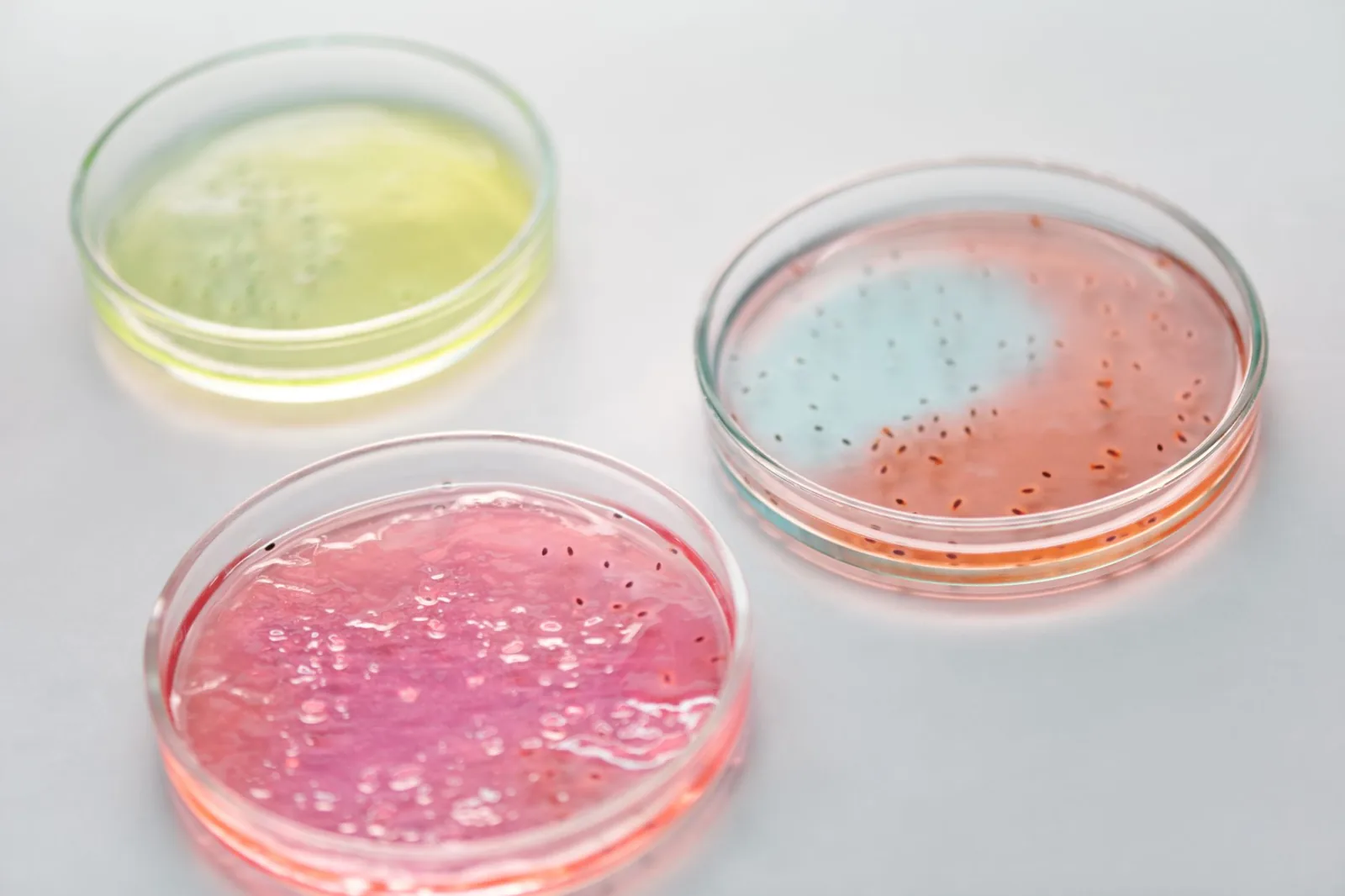
When someone says they got food poisoning from chicken, the phrase sounds like it describes one thing. In practice it describes several different organisms, each entering the food by a different door, surfacing after a different delay and stopping at a different action. This is not a detail for laboratory people: someone who knows that Campylobacter may take two to five days to appear, and that Listeria grows at fridge temperature, behaves differently in the kitchen from someone who assumes the whole risk is one thing that thorough cooking removes. This lesson introduces the three organisms most closely associated with chicken and eggs, and the control point that belongs to each.
Why each one deserves a name#
The practical difference between the three is not the severity of the illness but where you can stop them. One of them usually reaches you through your hands and your cutting board before it reaches you through the food itself, so its control point is separation and cleaning. The second is killed by thorough cooking without exception, so its control point is temperature and the instrument that measures it. The third is untroubled by the cold of your fridge and keeps growing there slowly, so its control point is how long you keep something, not how cold you keep it. Knowing that split lets you spend your attention accordingly, instead of cooking chicken perfectly and then leaving the leftovers in the fridge for ten days under the impression that the job is done.
Campylobacter: the world's most common, and the least known here#
The World Health Organization describes Campylobacter as the most common bacterial cause of human gastroenteritis in the world, and one of four key global causes of diarrhoeal disease. Yet its name is almost absent from everyday conversation about food safety, which Salmonella occupies on its own. WHO notes that eating undercooked contaminated poultry is believed to be a major contributor to these infections, which makes it the organism most tightly bound to the subject of this entire site.
What sets it apart in practice is the delay. WHO says symptoms usually begin two to five days after infection, with a range of one to ten days, and that the usual presentation is diarrhoea — frequently bloody — with abdominal pain, fever, headache, nausea and sometimes vomiting, typically lasting three to six days. That delay is the single most common misunderstanding in this area: someone who falls ill on Wednesday blames Wednesday's lunch, while the real culprit may be Sunday's dinner. And because the wrong meal is accused, nobody corrects the behaviour that actually caused the infection.
Its end, on the other hand, is heat and heat alone. WHO states that bactericidal treatment — heating, as in cooking or pasteurization, or irradiation — is the only effective method of eliminating Campylobacter from food. Most cases resolve without drug treatment, and deaths stay confined to the very young, the elderly, or those already suffering from another serious disease. But it has an unusual tail: WHO lists reactive arthritis and Guillain-Barré syndrome, a polio-like form of paralysis, among its post-infection complications. In a small number of cases, in other words, its effect outlasts the week of diarrhoea by a very long way.
If someone at home falls ill today, do not investigate today's meal alone. Write down what they ate over the past five days: Campylobacter's window alone stretches to ten days, and most people who look only at the last meal end up clearing the very meal responsible.
Salmonella: the famous one, and the best at waiting#
Non-typhoidal Salmonella is the name everyone knows, and it too is one of WHO's four key global causes of diarrhoeal disease. Symptoms appear six to seventy-two hours after eating contaminated food, usually within the twelve-to-thirty-six-hour window, and include fever, abdominal pain, diarrhoea, nausea and sometimes vomiting, lasting two to seven days in most people. Its main food sources, as WHO lists them, are eggs, meat, poultry and milk, along with vegetables contaminated by animal waste.
The trait that deserves attention in your kitchen is not in the symptoms but in the organism's toughness. WHO describes Salmonella as hardy, able to survive several weeks in a dry environment and several months in water. Read that sentence again while looking at the cutting board that dried out after you jointed a chicken on it yesterday, or the kitchen towel you wiped your hands on and hung up to dry, or the sink you rinsed a chicken in and then splashed with plain water. Drying is not sanitising, the absence of smell is not evidence of the absence of bacteria, and a week between two uses of a board does not by itself make it clean.
Listeria: the only one that grows inside your fridge#
Most food-safety rules rest on a single idea: cold stops bacteria from growing. Listeria monocytogenes is the exception that breaks it. WHO says that, unlike most foodborne pathogens, it can survive and multiply at the low temperatures usually found in refrigerators, and can grow to significant numbers in food at refrigeration temperatures. Your fridge slows it down; it does not stop it. Time is working against you even when the temperature is exactly right.
Which is why the foods tied to it are not raw chicken but ready-to-eat foods kept chilled and then eaten without reheating: WHO lists ready-to-eat meat products such as frankfurters, pâté and smoked salmon, along with soft cheeses, unpasteurised milk and prepared salads. The equivalent in a chicken kitchen is obvious — sliced cooked chicken, pre-made chicken salad, pulled chicken cooked on Thursday to fill Saturday's sandwiches. These are dishes that passed through a lethal temperature and then returned to the cold, so any contamination picked up after cooking finds an open road and plenty of time.
As for why all this deserves such caution despite how rare infection is, it is because the severity is in a different class from the other two. WHO describes invasive listeriosis as carrying a high mortality rate of twenty to thirty per cent among vulnerable groups, with an incubation period usually of one to two weeks but ranging from a few days up to ninety. The groups most at risk are pregnant women, the elderly and the immunocompromised: a pregnant woman is about twenty times more likely to contract it, and a person living with HIV at least three hundred times more likely. In pregnancy it can end in miscarriage or stillbirth, or in a newborn with low birth weight who develops septicaemia and meningitis. The one piece of good news in the picture is that it is killed by pasteurisation and cooking, so adequate heat settles the matter.
Three differences that change what you do tomorrow#
- Onset: hours to three days for Salmonella, two to five days for Campylobacter, one to two weeks and up to ninety days for Listeria. Do not put the last meal on trial by itself.
- Control point: separation and cleaning for Campylobacter and Salmonella, because they travel by hands and surfaces; duration rather than temperature for Listeria, because it grows in the cold.
- The food under suspicion: undercooked chicken and eggs for the first two; cooked, ready-to-eat food stored chilled and eaten cold for the third.
What kills all three: heat, measured rather than guessed#
For all the differences between them, the three meet at one point: enough heat ends them. And this is the number worth memorising. SFDA guidance calls for cooking poultry to seventy-four degrees Celsius at the deepest point, holding hot food at sixty degrees or above until service, and keeping perishable foods below five degrees. The problem is that none of these numbers is visible: the colour of the outside of the bird and the clarity of its juices are indicators that get it wrong often, especially in thick cuts, stuffed chicken and shawarma. The tool that turns that sentence from advice into procedure is a food thermometer, and nothing else.
And what does not kill them: freezing, washing and marinating#
- Freezing does not kill. USDA's Food Safety and Inspection Service describes freezing at zero degrees Fahrenheit as inactivating any microbes present — bacteria, yeasts and moulds — but notes they become active again after thawing and multiply given the right conditions. The freezer stops the clock; it does not reset it.
- Washing raw chicken does not sanitise it. Water spraying out of the sink spreads whatever is on the bird onto the surfaces, utensils and clothes around it, and only heat settles the matter inside the meat.
- Marinating is not a treatment. The acidity of lemon or vinegar changes texture and flavour, but it is not a recognised kill step, and a long soak outside the fridge raises the risk rather than lowering it.
- Your senses do not detect them. Listeria, Salmonella and Campylobacter do not necessarily change a food's colour, smell or taste, and the spoilage signs you can smell are a different matter entirely from the organisms that make you ill.
The rule that sums the section up: cold only buys time, washing only moves the problem, and the one thing that ends it is enough heat, measured with a thermometer.
WHO's five keys, one set for all three#
On its pages for Campylobacter, Salmonella and Listeria alike, WHO points to the same framework: the Five Keys to Safer Food. Its presence in all three is not repetition but the message itself — you do not need a different protocol per organism, you need five habits that cover all of them.
- Keep clean: hands, surfaces and tools before and after food, not once at the end of cooking.
- Separate raw and cooked: dedicated boards, utensils and shelves, with raw always at the bottom of the fridge beneath ready-to-eat food.
- Cook thoroughly: seventy-four degrees Celsius for poultry at the deepest point, with a thermometer rather than by eye.
- Keep food at safe temperatures: below five degrees chilled, above sixty held hot, and never more than two hours in between.
- Use safe water and raw materials: a trusted source for chicken and eggs, a clear date, and a cold chain that was not broken on the way to your home.
When this becomes a doctor's visit#
Most Salmonella and Campylobacter cases pass within days without drug treatment, and in small children and the elderly the bigger danger is dehydration from diarrhoea and vomiting rather than the infection itself. But some situations do not tolerate waiting:
- Bloody diarrhoea, a high fever, or diarrhoea continuing more than a few days without improvement.
- Signs of dehydration: reduced urination, a dry mouth, marked lethargy or dizziness on standing — especially in children and older adults.
- Neurological symptoms or weakness in the limbs weeks after a bout of diarrhoea, the picture that calls for ruling out the complications WHO describes.
- Pregnancy: any unexplained fever or flu-like symptoms after eating ready-to-eat foods deserve a doctor's visit with the food mentioned, given how dangerous Listeria is in pregnancy specifically.
- A weakened immune system or a serious chronic illness: the threshold here is far lower, and waiting is not a good option.
A practical summary in five steps#
- Treat every raw bird as if it carries all three, because its appearance will tell you nothing either way.
- Make separation and cleaning a habit before cooking: they are the control point for the two organisms that travel on your hands.
- Measure seventy-four degrees with a thermometer; do not judge by colour or by the clarity of the juices.
- Give leftovers and ready-to-eat foods a time limit, not only a temperature: three to four days in the fridge, and thorough reheating before eating if it has been a while.
- If someone falls ill, cast your memory back five days rather than five hours, and correct the step that actually caused it.
Frequently asked questions
I ate chicken yesterday and I am fine — does that mean it was safe?
Not necessarily. Salmonella's window runs up to seventy-two hours, Campylobacter's usually opens after two to five days and can reach ten, and Listeria's incubation can stretch to ninety days. One quiet day does not clear a meal, just as today's illness does not convict today's meal. Tracking what was eaten over the past several days is more reliable than looking only at the last one.
Does freezing kill the bacteria in chicken?
No. USDA's Food Safety and Inspection Service describes freezing at zero degrees Fahrenheit as inactivating microbes — bacteria, yeasts and moulds — but says they become active again after thawing and multiply given the right conditions. In practice this means frozen chicken is safe while it stays frozen, and the critical moment is thawing and what follows it: thaw in the fridge rather than on the counter, cook thoroughly afterwards, and do not refreeze anything thawed outside refrigeration.
Food in the fridge is always safe as long as it is cold, isn't it?
Cold stops most bacteria, but it does not stop Listeria. WHO states that Listeria monocytogenes, unlike most foodborne pathogens, survives and multiplies at the low temperatures usually found in refrigerators and can reach significant numbers at refrigeration temperature. That is why cooked and ready-to-eat foods need a maximum duration and not only a temperature: three to four days is a sound working rule for leftovers, with thorough reheating before eating.
Which organism is most associated with chicken specifically?
Campylobacter — the least famous of the three. WHO describes it as the most common bacterial cause of gastroenteritis in the world and says that eating undercooked contaminated poultry is believed to be a major contributor to infection. It adds that bactericidal treatment such as heating by cooking or pasteurisation, or irradiation, is the only effective method of eliminating it from food, which makes thorough cooking and preventing cross-contamination afterwards the two most important measures in any kitchen that handles chicken.


