
Chicken in the school lunchbox: getting it to the break still cold and safe
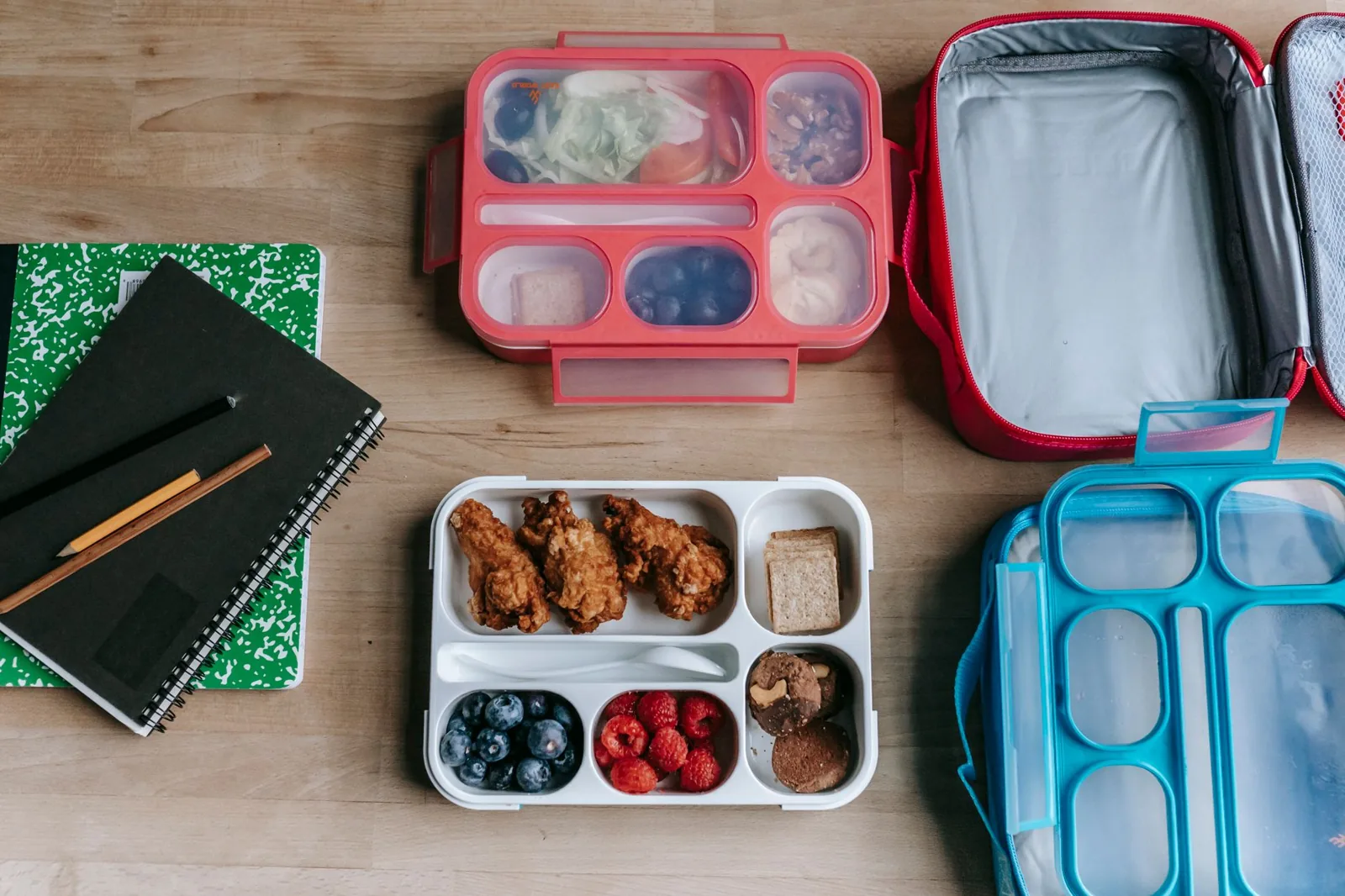
The sandwich is made at six in the morning from last night's leftover chicken, it goes into the bag, and the bag leaves the house at half past six. Then it hangs on a hook in a school corridor, or sits under a desk, until the first break at around half past nine. Three and a half hours — nobody counts them because they feel short — in a month when the average high in Riyadh is close to 40 °C. This lesson is about exactly those hours: what happens during them, and how to make sure a chicken sandwich reaches the break as cold as it left the fridge. The 1448 school year began on 23 August, so the question is a live one in every household with a pupil in it.
The clock that starts when the bag closes#
The bacteria that cause food poisoning multiply fastest in a band the USDA calls the danger zone: between 4 °C and 60 °C. Cooked chicken is a perishable food sitting squarely inside that band the moment it leaves the fridge. The standard rule is that perishable food should not stay out of refrigeration for more than two hours — and that the allowance shrinks to a single hour once the surrounding temperature goes above 32 °C. It is that second number which matters to a Saudi family at the start of the school year, because most of a September day is above it, and a bag on a hook in an un-air-conditioned corridor, or in a car parked for ten minutes, passes it easily.
Count the hours from the moment the food left the fridge, not from the moment your child left the house. A sandwich made at six that then sits on the kitchen counter until half past six has already spent half its allowance before it moves.
What the Saudi FDA advises#
The Saudi Food and Drug Authority publishes its own guidance on preparing the school breakfast bag, written for our conditions rather than someone else's. What makes it useful is that it does not stop at "keep the food cold" — it says how: keep the food in the fridge until the moment it goes into the bag and not before, choose an insulated bag or one with a pocket for a frozen cooling pack, keep the bag closed and out of direct sunlight for the whole school day, and eat the food at the first break at the latest. It also flags that foods containing meat, eggs or dairy are the ones that most need refrigeration, and that not sending excessive quantities is a safety measure, not only a thrifty one.
- Wash hands with soap and water for at least twenty seconds before starting to prepare the food.
- One cutting board for vegetables and fruit, a different one for meat and poultry, to prevent cross-contamination.
- Food stays in the fridge until the moment it goes into the bag — not on the counter waiting for the school run.
- An insulated bag, or one with a pocket for a frozen gel pack or a frozen bottle of water or juice.
- The bag stays closed and out of direct sunlight all day.
- The meal is eaten at the first break at the latest, and the portion matches what the child actually eats.
Two cold sources, not one#
The detail that makes the practical difference — and the one American food-safety agencies keep repeating — is the number of cold sources, not merely their presence: an insulated bag with two frozen cold sources keeps perishable food at 4 °C or below until lunchtime. A single source melts out by mid-morning and becomes a bag of warm water; two of them cover different parts of the meal and last considerably longer. And a frozen bottle is not dead weight: a frozen water or juice box works as a coolant on the way and becomes a cold drink at the break, which is the cheapest way to add that second source without buying anything.
- Put the frozen gel pack right against the sandwich, not at the bottom of the bag under everything — cold sinks, so contact is what counts.
- A water or juice bottle frozen the night before plays the part of the second source and is then drunk cold.
- A full bag holds its cold far longer than a half-empty one, so fill the gaps with chilled fruit or a folded napkin.
- Wrap the sandwich well: every layer slows heat reaching it and keeps it from touching the rest of the contents.
- Do not put a hot drink and cold food in the same bag — each works against the other.
What freezes well and what does not#
One of the smartest points in the SFDA guidance is that several lunchbox components freeze well: bread, cooked meat, cheese, peanut butter and cooked eggs. Sandwiches can be made at the weekend and frozen, or made the evening before and kept in the fridge. The benefit is double: a sandwich taken out of the freezer in the morning acts as a coolant for itself and for what surrounds it, then thaws gradually and is ready to eat by the break. What does not freeze well is the watery additions — lettuce, tomato and mayonnaise — which lose their texture and weep once thawed, so those are added on the morning itself or carried separately.
Make four chicken sandwiches on Thursday evening, wrap each one separately and freeze them, then take one out each morning. You save minutes in a rushed morning — and you gain an extra cold source inside the bag for free.
The sandwich begins before the bag#
No insulated bag will save chicken that went in warm. Insulation holds heat in just as it holds cold in, so a closed bag around warm chicken is an incubator rather than a cooler. The rule is that cooked chicken is chilled in the fridge to 4 °C or below first, and only then made into a sandwich. If the chicken is left over from last night's dinner the fridge has already done that work — which is exactly what makes the option attractive, provided it went into the fridge straight after dinner rather than hours later. Chicken cooked specially in the morning needs rapid cooling in a shallow container before it is wrapped, and if there is no time for that it is better kept for tomorrow. The cooking requirement itself still stands: 74 °C at the thickest point.
The hot option: a thermos and the 60 °C rule#
Some families prefer to send a hot meal — chicken soup, or rice and chicken — and that works, provided the food resists the danger zone from the other side: staying at 60 °C or above until the container is opened. The method American food-safety sources recommend is simple, and widely skipped: a cold insulated flask steals the food's heat in the first ten minutes, so the flask is preheated first.
- Fill the flask with boiling water and leave it closed for a few minutes.
- Empty the water immediately before filling.
- Add the food piping hot, not lukewarm — a flask preserves heat, it does not create it.
- Seal it and keep it closed until the break.
- Whatever is left in the flask after the break is not reheated the next day.
What comes home in the bag#
The half sandwich that comes back at two in the afternoon has spent some eight hours out of the fridge, part of that above 30 °C. It does not go back into the fridge and it is not eaten later in the day — and the decision is not based on smell, taste or appearance, because the bacteria that cause poisoning change none of the three. Food looking perfectly fine is precisely what makes this mistake so common. The bag itself needs daily attention too: a drop of chicken juice or a damp crumb stays there until tomorrow and contaminates tomorrow's meal.
- Throw out any perishable food that comes back from school, however fine it looks.
- Empty the bag completely, wipe it out with soap and water, and leave it open to dry.
- Wash containers and their lids in hot soapy water, paying attention to rims and hinges.
- Put the gel packs back in the freezer as soon as you get home so they are ready for tomorrow.
- Whole unpeeled fruit can come back and be eaten — chicken, eggs and dairy cannot.
A morning routine that needs no thinking#
- Wash your hands for twenty seconds and set out a clean board for vegetables, separate from the poultry board.
- Take the cold chicken out of the fridge, build the sandwich within a few minutes, and put it back in the fridge if there is time before leaving.
- Into the insulated bag: a frozen gel pack pressed against the sandwich, and a frozen bottle of water on the other side.
- Add the vegetables and fruit, close the bag, and fill any empty space.
- Do not leave the bag in a car in the sun even for minutes, or on a hook in a sunlit corridor.
- Remind your child that the chicken meal is for the first break, not to be pushed to the second.
- On return: discard leftovers, clean the bag, put the gel packs back in the freezer.
Nothing in this routine costs more than one gel pack and a bottle of water put in the freezer each evening, and together they address the real reason school lunches go wrong: not the ingredients and not the sauce, but three and a half hours that cooked chicken spends in a bag whose clock nobody is watching. Keep those hours cold, and the meal reaches the break exactly as it left the fridge.
Frequently asked questions
Can a sandwich that came back from school be eaten in the evening?
No. Perishable food should not stay out of refrigeration for more than two hours — one hour if the temperature is above 32 °C — and a returning sandwich has spent several times that. More importantly, the judgement is not made by smell or appearance: the bacteria that cause poisoning change neither smell nor taste nor look, which is exactly why unsafe food can look perfectly fine. The practical rule is that anything coming out of the bag after the school day containing meat, chicken, eggs or dairy goes in the bin.
Is mayonnaise the reason a chicken sandwich spoils?
This is one of the most persistent food-safety myths. Commercial mayonnaise is made with pasteurised egg and acidified with vinegar or lemon juice, and that acidity slows bacterial growth rather than encouraging it, so on its own it is low risk. The perishable ingredient in the sandwich is the chicken, and that is what has to stay cold. Home-made mayonnaise from raw, unpasteurised egg is a different matter: it carries a real risk and does not belong in a bag that spends hours out of the fridge.
Is one gel pack in the bag enough?
The standard advice is two cold sources inside an insulated bag, because together they hold perishable food at 4 °C or below until it is eaten. A single pack melts out by mid-morning and becomes a bag of warm water inside a sealed bag. The easiest second source costs nothing: a bottle of water or juice frozen the night before, working as a coolant on the way and drunk cold at the break. If that is not possible, the alternative is for the sandwich itself to leave the house frozen.
What should I send if I have no insulated bag and no gel packs?
In that case the Saudi FDA's advice is to avoid foods that need refrigeration — those containing meat, eggs or dairy. There are plenty of shelf-stable alternatives that suit a school day perfectly: peanut butter with bread, dates and nuts, whole unpeeled fruit, and bread with shelf-stable portioned cheese kept at room temperature before opening. If chicken is unavoidable, send the sandwich fully frozen with a frozen bottle of water beside it, and ask for it to be eaten at the first break.


